Saama automates key clinical development and commercialization processes using AI, Generative AI, and advanced analytics — accelerating your time to market.
Saama automates key clinical development and commercialization processes using AI, Generative AI, and advanced analytics — accelerating your time to market.
Transforming the FPI-to-Submission corridor with Responsible AI & Automation across all five functional domains of clinical trials
$15M – $21M
Per-Trial AI Savings
70%
LPLV to Submission Compression
35% – 45%
Productivity Gain
$20M – $30M
Per-Trial AI Savings
90%
LPLV to Submission Compression
45% – 65%
Productivity Gain
Why Clinical Trials Become More Expensive Than Planned
The Hidden Cost Between First Patient In and Submission
How Saama Uses Responsible AI and Automation to Compress the FPI-to-Submission Timeline
Cost Control
Most Trial Costs Are Controllable
50%–70% of trial spend is concentrated in five optimizable areas — yet most sponsors treat it as fixed.
Explore outcome
Saama clients recover 15%–25% of compressible spend by applying AI-driven automation across data review, monitoring, and submission workflows — without touching fixed passthroughs.
Submission Delay
Time-to-Submission Bottleneck
LPLV-to-submission averages 20–24 weeks. Every extra week is budget burned and a patient waiting.
Explore outcome
Automated data cleaning, lock readiness dashboards, and continuous signal detection compress the LPLV-to-lock window by 6–8 weeks — getting submissions out faster and teams off-trial sooner.
Rework Cycle
Biostatistics & Submission Rework
8–12 weeks post-lock, 30%–40% rework — because quality checks happen too late in the process.
Explore outcome
Continuous quality checks running throughout the trial — not just at lock — reduce post-lock rework by up to 60% and cut statistical review cycles from weeks to days.
Staff Burden
Manual Processes Strain Clinical Teams
CRA turnover at 22%. AI workload growing 20% annually. The math doesn’t work without automation.
Explore outcome
Saama’s AI agents automate up to 70% of routine monitoring tasks — SDV, source data review, query management — so CRAs spend time on sites, not screens. Lower burden, lower attrition.
Start-Up Loss
Slow Trial Start-Up Burns Budget
6–9 months to first patient. 10%–15% of budget spent before a single data point is collected.
Explore outcome
Digitized protocol-to-site packages and AI-assisted regulatory submission cut start-up timelines by 8–12 weeks, preserving $1M–$3M in pre-enrollment budget on a typical Phase II.
Protocol Waste
Protocol Complexity Drives Avoidable Amendments
Most amendments are preventable. Each one costs $450K–$900K and disrupts every active site.
Explore outcome
Protocol optimization at design time reduces amendment rate by 30%–40% — eliminating an average of $450K–$900K in per-amendment costs and the site disruption that follows.
Six Functional Domains
From data origin to submission. Each domain carries its own workforce load, technology debt, and process latency.
Study Startup
Budget Share:
10%–15%
As-Is:
$5M–$7.5M
To-Be:
$2M–$3.5M
60% Startup Cycle Compression
Clinical Data Management
Budget Share:
10%–15%
As-Is:
$5M–$7.5M
To-Be:
$2M–$3.5M
60% CDM effort reduction
Clin Ops & CRA
Budget Share:
20%–25%
As-Is:
$10M–$12.5M
To-Be:
$5M–$6.75M
Up to 50% CRA cost reduction
Next-Gen RBQM
Budget Share:
5%–8%
As-Is:
$2.5M–$4M
To-Be:
$1.25M–$2.25M
50% operational efficiency gain
Medical/Safety
Budget Share:
8%–15%
As-Is:
$4M–$7.5M
To-Be:
$1.5M–$4M
Up to 60% cost reduction
Biostatistics & Submissions
Budget Share:
8%–12%
As-Is:
$4M – $6M
To-Be:
$1.5M – $3M
Up to 62% less programming effort
Seven Functional Domains
From data origin to submission. Each domain carries its own workforce load, technology debt, and process latency.
Study Startup
A single, real-time view of study, country, and site-level start-up activities with automatically tracked milestones, surfacing bottlenecks before they delay first-patient-in.
Transform data lifecycle from batch to continuous. AI replaces manual cleaning cycles with always-on monitoring, compresses data lock from 7 weeks to 1-2 weeks — accelerating the path to submission.
The single largest CRO cost center. Estimand-driven monitoring refocuses CRA effort on scientifically critical data, remote-first replaces scheduled visits, and AI auto-generates monitoring visit reports.
AI-powered clinical operations with centralized monitoring, dynamic KRI management, signal orchestration, and automated CAPA workflows. Enables 100% data coverage with real-time signal detection.
Combines medical monitoring and pharmacovigilance. AI delivers 6x review throughput, 84% error reduction, and scales AE processing without proportional headcount — up to 66% manual workload reduction.
Synchronize external data and internal studies to track active operations and screen independent
IIT/IIS protocols—closing open IEP evidence gaps while dynamically refreshing dossiers to keep
clinical portfolios permanently current.
A single, real-time view of study, country, and site-level start-up activities with automatically tracked milestones, surfacing bottlenecks before they delay.
Offerings:
Budget Share:
10%–15%
As-Is:
$5M–$7.5M
To-Be:
$2M–$3.5M
60% Startup Cycle Compression
Clinical Data Management
Automated data review, cleaning, and reconciliation that flags discrepancies and generates queries as data is collected, keeping the database clean through to.
Budget Share:
10%–15%
As-Is:
$5M–$7.5M
To-Be:
$2M–$3.5M
60% CDM effort reduction
Clin Ops & CRA
Role-specific, real-time visibility across operational, clinical, and financial sources, so teams can prioritize site activity and act on risks instead of chasing reports.
Budget Share:
20%–25%
As-Is:
$10M–$12.5M
To-Be:
$5M–$6.75M
Up to 50% CRA cost reduction
Next-Gen RBQM
Continuous monitoring of data and processes across the trial, with predictive risk assessments and recommendations that de-risk operationsin real time.
Budget Share:
5%–8%
As-Is:
$2.5M–$4M
To-Be:
$1.25M–$2.25M
50% operational efficiency gain
Medical/Safety
Centralized patient data with real-time AI that predicts patient behavior, tracks progress, and accelerates clinical signal discovery.
Budget Share:
8%–15%
As-Is:
$4M–$7.5M
To-Be:
$1.5M–$4M
Up to 60% cost reduction
Biostatistics & Submissions
AI-automated dataset transformation and mapping that simplifies and accelerates regulatory submissions with improved accuracy and consistency.
Budget Share:
8%–12%
As-Is:
$4M–$6M
To-Be:
$1.5M–$3M
Up to 62% less programming effort
Saama Llama Says
Chief Efficiency Officer
We didn't take a general AI and apply it to clinical trials. We built clinical AI from day one — and spent a decade perfecting it. That gap doesn't close overnight
Backed by 4100+, global research citations, 99+ publications, and an in-house research lab that competitors simply don’t have.
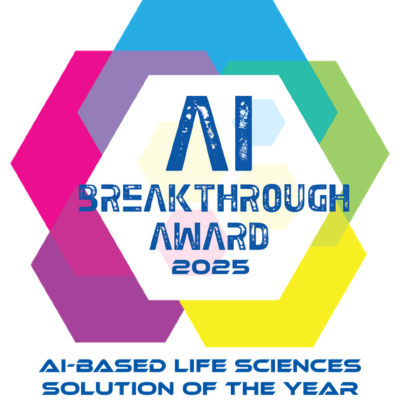
Awards
Years Of Empowering Clinical Trial Transformation
Saama’s AI platform delivers measurable, documented results across every stage of clinical development. These aren’t projections — they’re proof.
Data Hub
Faster Data Discovery
0%
reduction in time to data discovery
Smart Data Quality (SDQ)
Hours Saved
0+
of manual work eliminated
Patient Insights
Patient Review Savings
0%
time savings for patient data review
AI Document Generator
Faster Document Drafting
0%
reduction in content drafting time
Global Research
Therapeutic Areas
0+
clinical trials powered across specialties
In-House AI Research Lab
Research Citations
0+
AI publications cited globally
Saama Videos
Saama Llama Says
Chief Efficiency Officer
"A decade of exclusive life sciences AI research means our models don't just process clinical data — they understand it. That's the difference between software and a true research partner."
Grounded in Saama’s in-house AI Research Lab, 99+ publications, 8 patents
The Saama Difference
Saama has over a decade of experience developing and training AI models for life sciences that can be used out-of-the-box. Other companies are just beginning this research. By partnering with Saama, you are ahead of the curve.
Saama has its own AI research lab that consists of some of the world’s best AI researchers globally.
In-House Dedicated AI Researchers — our lab has spent a decade building, training and evolving AI/ML models specifically for life sciences.
Why 95% of AI Projects Stall — and How Agentic AI Changes the Game
Most AI projects in clinical development never leave pilot. In this live webinar, Saama’s AI research team breaks down the structural barriers — and how agentic, modular AI is built to overcome them. Watch now, available on-demand.
According to the Tufts Center for the Study of Drug Development, the average clinical trial can take 7–10 years from discovery to approval, and delays…